China’s sports ball industry serves schools, clubs, retailers, and professional competitions worldwide. Its strength lies in flexible manufacturing, varied materials, and competitive production capacity. However, supplier quality differs widely. A polished product photograph proves little.
Market data supports closer inspection. Grand View Research identifies growing demand for durable, performance-focused sports equipment, especially in organized fitness and team sports. The World Federation of the Sporting Goods Industry also reports continued global participation growth, while warning that supply chains face cost and quality pressures. These trends make supplier selection more important than simple price comparison. A low-cost ball can become expensive after repeated air loss, uneven rebound, or early seam failure.
This guide examines China’s top 10 sports ball suppliers through practical criteria, including factory experience, material traceability, testing systems, customization, export reliability, and after-sales support. It also explains How to fix common problems with sports balls, from valve leakage and panel wrinkles to poor grip and inconsistent circumference. FIFA Quality Programme testing emphasizes weight, circumference, rebound, water absorption, and shape retention for footballs. FIBA rules similarly define basketball dimensions and performance expectations. These standards offer useful reference points, even for training products.
Some supplier rankings remain subjective. Public data is incomplete. A factory may advertise advanced equipment but provide limited test records. Buyers should request samples, inspection reports, and production photographs before placing large orders. Small details matter. A loose valve can ruin a tournament. A weak adhesive can separate after one wet session. Reliable decisions require evidence, not confident claims.
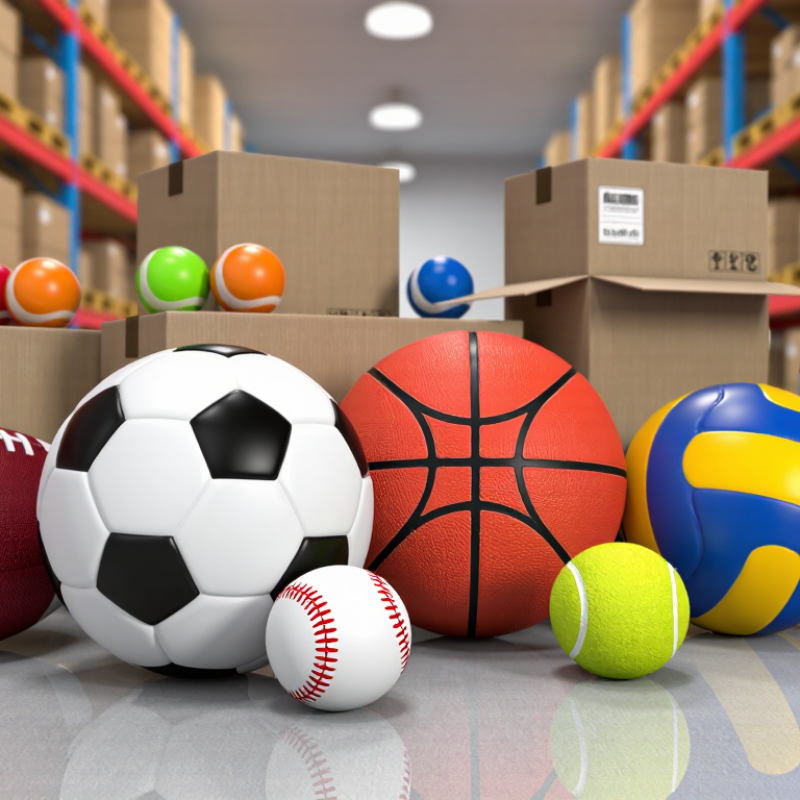
China’s top 10 sports ball suppliers are often compared by quality, production capacity, and service reliability. A practical selection starts with materials. Check leather or synthetic panels, bladder stability, seam strength, and surface grip. Ask for samples before discussing large orders. Small details matter.
Factory experience also deserves close attention. Review production records, testing procedures, and quality-control staff. Confirm size, weight, pressure retention, bounce, and roundness against recognized sports standards. A dependable supplier should provide inspection reports and explain how failed units are handled. I prefer suppliers that welcome third-party inspections, even when their internal checks appear sufficient. No factory is perfect.
The market covers footballs, basketballs, volleyballs, rugby balls, and training products. Many manufacturers support private-label production, flexible colors, and moderate minimum order quantities. However, seasonal demand can extend lead times, especially before major sporting events. Price competition remains strong, but very low quotations may hide thinner materials or weaker stitching. Clarify mold costs, packaging, delivery terms, replacement policies, and production schedules in writing. When panels separate or air escapes, request root-cause photos and a corrective-action plan, not only a refund. Environmental claims also need evidence, such as material records or test documents. I have seen attractive samples fail after repeated use. That mistake is easy to repeat.
When comparing China’s top sports ball suppliers, product range should be checked before price. Strong suppliers usually offer footballs, basketballs, volleyballs, rugby balls, training balls, and promotional models. Some also produce youth sizes and custom panel designs. I review sample weight, circumference, grip, bladder pressure, and print accuracy. Small differences often reveal larger production problems.
Manufacturing capacity varies widely. A supplier may claim high monthly output but lack enough stitching lines or skilled inspectors. Ask for production records, machinery details, staffing levels, and realistic lead times. A reliable factory can explain its hand-stitched, machine-stitched, or thermally bonded processes clearly. It should also provide material specifications and inspection reports. During one sample review, I found a ball with correct dimensions but uneven panel bonding. The factory corrected it, yet the first sample still deserved more scrutiny.
Specialties help match a supplier to a project. One may excel at durable school-training balls, while another focuses on match-quality construction or recycled materials. Ask how suppliers control common issues, including air leakage, shape distortion, color inconsistency, and delayed replacement goods. Factory audits and independent pre-shipment checks add useful evidence. Still, certifications alone are not enough. Production discipline can change between orders. A written approval sample, clear tolerance limits, and batch photographs create stronger accountability. This process takes time. It prevents expensive surprises.
Standard circumference ranges help buyers compare supplier product coverage, tooling requirements, material selection, and quality-control capability across major sports-ball categories.
The chart uses internationally recognized regulation ranges: size 5 footballs measure 68–70 cm, size 7 basketballs 75–77 cm, volleyballs 65–67 cm, size 3 handballs 58–60 cm, and standard netballs 69–71 cm. Suppliers serving several categories must maintain different molds, panels, bladder specifications, and inflation controls.
When comparing China’s top sports ball suppliers, inspect the ball before trusting any certificate. Measure diameter, mass, roundness, air retention, rebound height, and seam strength. Use a calibrated scale and pressure gauge. A visual check is not enough.
Ask for a recent test report linked to the exact material, model, and production batch. The laboratory should hold ISO/IEC 17025 accreditation. Check whether the report covers chemical limits, surface coatings, small parts, and physical performance. For children’s products, applicable requirements may include ASTM F963, EN 71, or ISO 8124.
A CE mark alone is not a universal quality certificate. It usually reflects a conformity declaration, not proof of every performance claim.
The European Commission’s Safety Gate report recorded 3,412 product alerts in 2023, with toys among the most frequently reported categories. That figure shows why safety screening deserves more than paperwork. The ISO Survey 2023 reported over 1.26 million ISO 9001 certificates worldwide, but certification does not guarantee every ball is consistent.
I have seen good samples fail after mass production. Request three random cartons, not one polished sample. Photograph labels, valves, seams, and packaging. Verify batch codes and keep sealed comparison samples. Small gaps matter.
China Top 10 Sports Ball Suppliers: How to Fix Common Issues
Shape problems often begin with uneven panel tension or weak bladder placement. For footballs, the IFAB Laws of the Game specify a size 5 circumference of 68–70 centimetres. Suppliers should measure at several points, not only across one axis. A 2024 FIFA Quality Programme testing manual also evaluates sphericity, rebound, water absorption, and pressure loss. Small shape errors can affect flight stability.
Air pressure needs a controlled process. The IFAB standard requires 0.6–1.1 bar for footballs. Store balls away from heat, then check pressure with a calibrated gauge before shipment. FIFA testing also examines pressure retention over time. A leaking valve, even a slow one, can create customer complaints within days. In my experience, suppliers often test new samples carefully but inspect mass production less consistently. That is a mistake worth reviewing.
Tips: Use a three-point inspection system. Check the bladder, valve, and outer panels separately. For durability, test repeated impacts, moisture exposure, and seam strength. Record failures by batch number. A practical target is fewer defects, not a perfect first sample. Material hardness can improve wear resistance, but it may reduce touch and flexibility. Ask independent laboratories to verify results against FIFA, ISO, or relevant federation standards before approving large orders.
| No. | Common Issue | Typical Sports Ball | Likely Root Cause | How to Check | Recommended Fix | Preventive Quality Control | Acceptance Target |
|---|---|---|---|---|---|---|---|
| 1 | Oval or distorted shape | Soccer, basketball, volleyball, rugby ball | Uneven panel tension, incorrect bladder positioning, incomplete molding, or excessive compression during packing. | Measure circumference at several angles and rotate the ball on a flat surface to identify wobble or asymmetry. | Release air, reposition or replace the bladder when necessary, then reinflate gradually. Reject balls with permanent deformation. | Use a calibrated mold, control panel cutting accuracy, center the bladder, and allow the ball to cool before packing. | Measurements should remain within the sport-specific product specification; no visible flat spots or abnormal wobble. |
| 2 | Uneven circumference | Match and training balls | Inconsistent panel dimensions, stitching variation, seam displacement, or molding pressure imbalance. | Measure circumference in at least three directions using a flexible measuring tape and record the maximum deviation. | Separate nonconforming units. Adjust cutting dies, sewing guides, or mold pressure before continuing production. | Perform first-article approval and in-process dimensional checks at a defined sampling frequency. | For reference, a regulation-size soccer ball is commonly specified at approximately 68–70 cm circumference; always follow the agreed specification. |
| 3 | Wrinkles, dents, or creases | PU, PVC, and synthetic-leather balls | Low forming temperature, insufficient internal pressure, folded storage, or long-term compression in cartons. | Inspect under strong light after inflation and leave the ball at room temperature for several hours to check recovery. | Inflate to the specified pressure and allow the cover to relax. Replace units with permanent creases or damaged foam layers. | Control forming temperature, use protective separators, and avoid overstacking during storage and shipment. | Surface should be smooth and uniform, with no permanent crease that affects roundness, bounce, or handling. |
| 4 | Air pressure drops quickly | Inflatable balls with bladder valves | Leaking valve, punctured bladder, porous seam, damaged needle valve, or insufficient bonding around the valve. | Inflate the ball, apply soapy water to the valve and seams, and monitor pressure with a calibrated gauge over 24 hours. | Replace the valve or bladder when repair is unreliable. For minor valve-seat leaks, use an approved repair process. | Conduct leak testing after assembly, protect valve stems during packing, and use clean, lubricated inflation needles. | No visible bubbles during leak testing; pressure retention must meet the agreed sport-specific test period and limit. |
| 5 | Pressure is too high or too low | Soccer, basketball, volleyball, and handballs | Incorrect filling equipment setting, inaccurate gauge, temperature change, or misunderstanding of the required pressure range. | Compare the production gauge with a calibrated reference gauge at the same temperature and measure after stabilization. | Adjust pressure gradually. Do not use excessive force when inserting the inflation needle, as it can damage the valve. | Calibrate gauges regularly, record filling pressure by batch, and print the applicable pressure range in the inspection specification. | Use the approved sport-specific range; for example, many soccer specifications use approximately 0.6–1.1 bar, depending on the product and rules. |
| 6 | Pressure changes with temperature | All air-filled sports balls | Air pressure naturally changes as temperature changes; cold storage lowers pressure readings and heat raises them. | Let the ball stabilize at room temperature before measuring. Compare readings at consistent temperature and humidity. | Recheck and adjust pressure after acclimatization instead of filling immediately after cold transport or hot processing. | Define a standard measurement environment, commonly around 20–25°C, and document conditioning time before inspection. | Pressure should meet the approved range after temperature stabilization, not only immediately after filling. |
| 7 | Low rebound or inconsistent bounce | Basketball, volleyball, soccer, and handballs | Incorrect inflation, uneven bladder placement, excessive cover weight, poor elasticity, or inconsistent test surface. | Test multiple balls at the same pressure on a level, hard surface using a fixed release height and repeatable measurement method. | Correct pressure first, then inspect the bladder, cover construction, and weight. Rework or reject balls outside the approved rebound range. | Control ball weight, bladder material, panel tension, and test conditions during production and final inspection. | Rebound must fall within the sport-specific specification with limited variation between samples from the same batch. |
| 8 | Seam opening or stitching failure | Hand-stitched, machine-stitched, and hybrid balls | Incorrect thread tension, insufficient stitch density, weak thread, damaged panels, or inadequate seam bonding. | Inspect seams visually and perform repeated flexing or pressure cycling on representative samples. | Trim loose threads, resew only when the panel is undamaged, and replace balls with enlarged openings or bladder exposure. | Set stitch length and thread tension, inspect needle condition, and use approved thread and seam-strength procedures. | No open seam, exposed bladder, skipped stitch, or loose thread that can enlarge during normal use. |
| 9 | Cover peeling, cracking, or delamination | PU and PVC synthetic-cover balls | Incompatible adhesive, inadequate surface preparation, excessive heat, moisture contamination, or repeated abrasion. | Perform visual inspection, tape adhesion checks where appropriate, and controlled abrasion or flex testing on sample units. | Remove contaminated material and re-cover only when the repair meets appearance and performance requirements; otherwise replace the ball. | Control adhesive quantity, curing time, surface cleanliness, temperature, and humidity during bonding. | Cover must remain firmly bonded after the agreed flex, abrasion, and environmental tests, with no functional peeling. |
| 10 | Rapid wear, scuffing, or water absorption | Outdoor training balls and textured-cover balls | Cover material not matched to the playing surface, insufficient protective coating, rough courts, UV exposure, or moisture penetration. | Inspect after controlled use or abrasion cycles and compare weight before and after water exposure when water resistance is required. | Use a surface-appropriate cover, improve coating or seam sealing, and dry balls naturally away from direct heat. | Specify indoor or outdoor use, control material thickness and coating, and conduct abrasion, moisture, and UV checks where applicable. | No performance-affecting cover loss, excessive deformation, or water absorption beyond the agreed product specification. |
Inspection note: Pressure, circumference, weight, rebound, durability, and water-resistance requirements vary by sport, size, construction, and intended use. Final acceptance should follow the approved product specification and applicable sports governing-body requirements.
China Top 10 Sports Ball Suppliers: How to Fix Common Issues
Customization problems often begin with unclear specifications. Send the supplier a simple product sheet with size, weight, material, panel design, logo position, and color references. Request a pre-production sample before approving bulk manufacturing. Inspect the sample under natural light and measure its circumference with a calibrated tool. Small color differences can become obvious across hundreds of balls. I have seen approval delays caused by one missing Pantone reference. That mistake is easy to prevent.
Delivery issues require written checkpoints. Confirm the sample date, production period, inspection date, packing method, and shipping documents. Ask for weekly progress photos showing cartons, labels, and finished quantities. A realistic buffer of seven to ten days can protect seasonal orders. Do not rely only on a promised shipping date. Port congestion, material shortages, and inspection failures can still affect schedules. Some buyers also forget to confirm carton dimensions, increasing unexpected freight costs.
After-sales support should be agreed before payment. The contract should define acceptable defects, evidence requirements, response time, and replacement procedures. Photograph damaged cartons immediately after arrival, including shipping labels and internal packaging. Separate manufacturing defects from transport damage. This distinction matters. A supplier with documented inspection records can investigate faster and offer practical solutions. However, buyers should review their own instructions honestly. Vague artwork, rushed approvals, or incomplete testing may have contributed to the problem. Clear communication is not glamorous, but it prevents expensive misunderstandings.
A capable supplier may produce footballs, basketballs, volleyballs, rugby balls, and training balls. Youth sizes and custom panel designs can also matter. Match the product range to your project, not just the quoted price.
Request production records, machinery details, staffing levels, and realistic lead times. Check whether the factory has enough stitching lines and trained inspectors. High output claims need evidence. A large number may still hide weak inspection control.
Measure weight, circumference, roundness, grip, air pressure, rebound, and print accuracy. Inspect seams, valves, panel bonding, and surface texture. Use a calibrated scale and pressure gauge. One visual check is not enough.
Request three random cartons instead of one polished sample. Compare their weight, shape, labels, valves, seams, and packaging. Record batch codes and keep sealed comparison samples. The first sample can mislead you.
Ask for a recent laboratory report linked to the exact model, materials, and batch. The laboratory should have recognized technical accreditation. Check chemical limits, coatings, small parts, and physical performance. A certificate alone proves less than many buyers assume.
Measure football circumference at several points, not only across one axis. Check the bladder, valve, and outer panels separately. Store balls away from heat before testing pressure. A slow leak becomes a complaint quickly.
Hand stitching, machine stitching, and thermal bonding offer different results. Ask the supplier to explain each process clearly. Check panel tension, bladder placement, and seam strength. I once accepted correct dimensions too quickly. The bonding was uneven.
Test repeated impacts, moisture exposure, air retention, and seam strength. Record every failure by batch number. Harder materials may resist wear but reduce touch and flexibility. Fewer defects matter more than a perfect first sample.
This guide presents a practical overview of China’s top sports ball suppliers, focusing on selection criteria such as product variety, manufacturing capacity, quality systems, communication, and export experience. It explains how to compare suppliers according to their specialties, including balls for training, competition, recreation, and promotional use. Readers will also learn how to inspect materials, stitching, roundness, rebound, weight, air retention, and safety documentation before placing an order.
The article also explains How to fix common problems with sports balls, including irregular shape, unstable air pressure, surface wear, weak seams, and reduced durability. It provides straightforward troubleshooting steps, such as controlled inflation, proper storage, pressure checks, and inspection of construction quality. In addition, it covers how to manage customization requirements, confirm samples and packaging, prevent delivery misunderstandings, and resolve after-sales issues through clear specifications, quality records, inspection procedures, and timely communication.

Insider Sports